
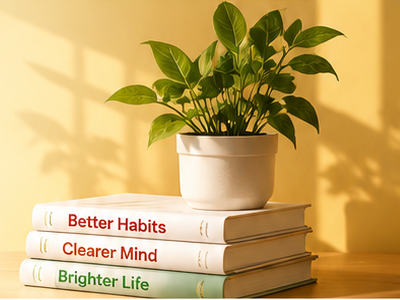

Daily habits can lead to a happier, healthier and more productive life.
Introduction
Daily habits shape your thoughts, actions and future. In this guide, you'll learn practical steps to build better habits and create lasting positive changes in your life.
Whether you want to be more productive, improve your health, or feel happier, small consistent habits can make a big difference. This article will help you understand how habits work and give you simple strategies to start today.
Why Daily Habits Matter
Daily habits create structure, reduce decision fatigue and help you stay focused on what really matters. When you build positive habits, you make progress automatically without relying only on motivation.

“Small steps every day lead to big results.”
Key Benefits of Daily Habits
Here are some of the key benefits of building positive daily habits:

Mental Health

Productivity

Happiness

Growth
How to Build Better Habits
Follow these practical steps to create and maintain positive habits:
Common Mistakes
Avoid these frequent pitfalls when establishing new personal routines:
| Common Mistake | What to Do Instead |
|---|---|
| Trying to change everything at once | Pick one cornerstone habit and master it for 30 days first. |
| Setting vague goals ("eat healthier") | Define exact triggers: "Eat an apple after lunch at 1:00 PM". |
| Quitting after missing one day | Adopt the rule: Never miss twice. One missed day is an accident; two is a new habit. |
Expert Tips
Behavioral psychologists recommend using habit stacking: pairing your new desired routine directly onto an already automatic habit (for example: "After I brew morning coffee, I will write down three priorities for the day").
Frequently Asked Questions
The fastest way to build a daily habit is to start small (the 2-minute rule), attach it to an existing habit (habit stacking), and maintain consistent timing every day.
Research published in the European Journal of Social Psychology shows that it takes an average of 66 days for a new behavior to become an automatic daily routine.
Do not be discouraged. Consistency is about long-term averages, not an unbroken chain. Follow James Clear's rule: "Never miss twice" and jump right back in the next day.
Our Simple Daily Routine
Here is a simple blueprint for structuring a high-energy, mindful day:
- 7:00 AM: Hydrate with 500ml water and 10 minutes of natural light exposure.
- 8:30 AM: 90-minute deep work block focused entirely on your single biggest priority.
- 1:00 PM: 15-minute screen-free walk after lunch.
- 9:30 PM: Evening reflection journal and 30-minute digital wind-down.
Sources & References
- Lally, P., et al. (2010). How are habits formed: Modelling habit formation in the real world. European Journal of Social Psychology.
- Wood, W., & Neal, D. T. (2009). The habitual consumer. Journal of Consumer Psychology.
- Clear, J. (2018). Atomic Habits: An Easy & Proven Way to Build Good Habits & Break Bad Ones.

Written by Aria
Writer & Self-Improvement Enthusiast
Aria writes about habits, mindset and personal growth. Her goal is to help people live happier, healthier and more meaningful lives through simple, practical steps.
View all articles by Aria →